The Refrigerator, the Mystery Leak and a Can of Liquid Gold
There are certain jobs on an old sailboat that start out looking simple and somehow turn into an entire adventure.
Getting the refrigerator working on La Sirena was one of them.
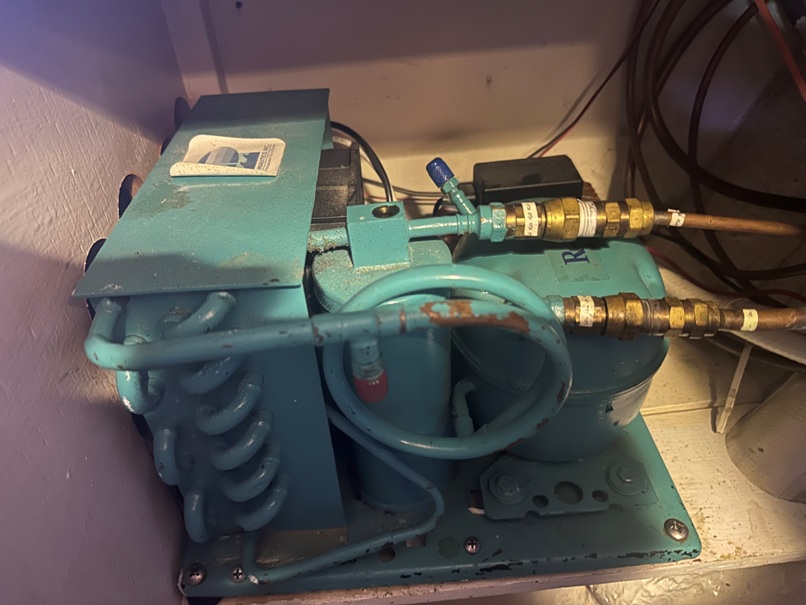
When I first switched the refrigerator back on after having it shut down for a while, it wasn’t cooling properly. The compressor was running, getting warm and giving off that reassuring little vibration that told me at least something was happening. But there was no frost on the evaporator plate and certainly no cold beer coming out of the other end.
At first I wasn’t sure whether I was looking at a dead compressor, an electrical problem, a thermostat issue or a refrigeration problem.
I let it run.
After several hours, there was finally a little bit of cooling happening at the plate. That was actually encouraging. The compressor was doing something. It suggested the basic refrigeration system wasn’t completely dead.
So began the investigation.
Eventually the question came down to refrigerant.
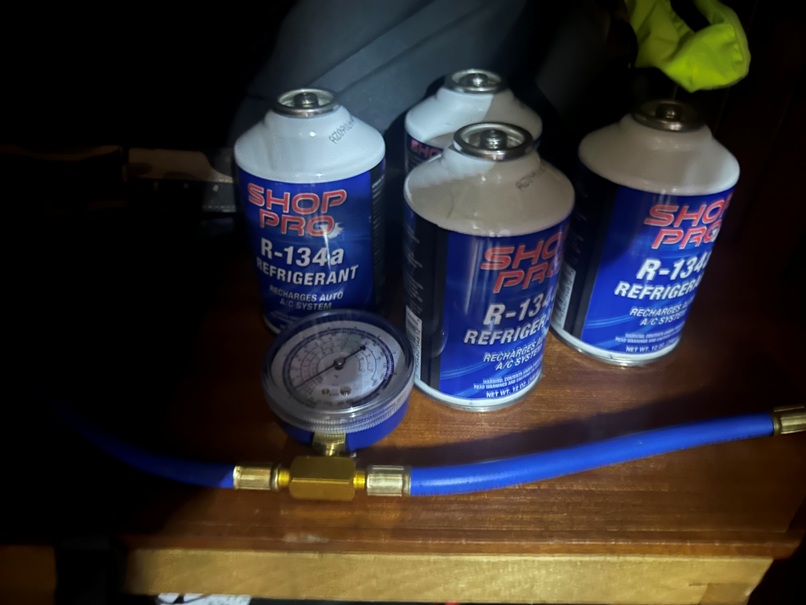
La Sirena’s refrigerator uses R-134a, which sounds like it should be one of the easiest things in the world to find. It isn’t — at least not here in Washington.
Apparently, R-134a has become something approaching gold dust.
Washington has restrictions on the sale of small cans containing high-GWP refrigerants, and R-134a is specifically one of the refrigerants caught by those restrictions.
So my perfectly ordinary little boat refrigerator suddenly had me hunting for a refrigerant that is becoming increasingly difficult to source locally.
And that’s when you realize how different maintaining an old boat can be from maintaining something built yesterday.
The refrigerator isn’t some modern appliance that you simply replace when it stops working. It’s part of a boat that was built decades ago, and the rest of the system is still perfectly serviceable. If the compressor works, the electrical system works and the refrigeration circuit itself is sound, throwing the entire thing away because of a refrigerant problem seems ridiculous.
Eventually, I managed to get my hands on some R-134a.
And that little can felt like treasure.
After getting the refrigerant situation sorted out and giving the system some time to run, the refrigerator started behaving the way it should. The cooling plate began getting properly cold and, most importantly, the refrigerator was finally doing what refrigerators are supposed to do.
It wasn’t a dramatic repair.
There was no giant mechanical failure, no spectacular explosion and no satisfying thunk when a broken part was replaced.
It was one of those jobs where you spend far more time figuring out what isn’t wrong than actually fixing something.
But that’s boating.
You learn to listen to the compressor. You watch the temperature. You feel the cooling plate. You check whether the electrical side is behaving. You try to understand what the system is telling you before you start replacing things.
And eventually, if you’re lucky, the answer presents itself.
In this case, the answer involved a little bit of R-134a that had become surprisingly precious in Washington State.
There’s also a bigger lesson here. Refrigerants like R-134a have a very high global-warming impact, which is why the restrictions exist in the first place. And EPA rules also prohibit intentionally venting refrigerant while servicing refrigeration equipment.
So I understand why the regulations are there.
But standing beside a 46-year-old sailboat trying to get its refrigerator working, it does make you appreciate just how valuable a small amount of the right refrigerant can suddenly become.
And now?
The refrigerator works.
Another system on La Sirena brought back to life.
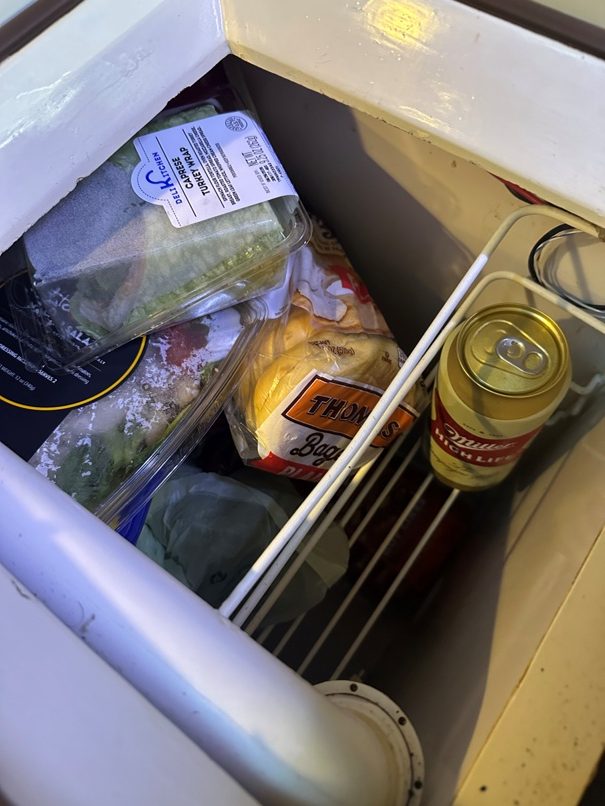
Cold drinks are back on the menu.
And somewhere in Washington, there is apparently a tiny amount of R-134a left in existence that is worth its weight in gold.
For a cruising sailor, that’s almost as good as finding a spare part that hasn’t been discontinued.