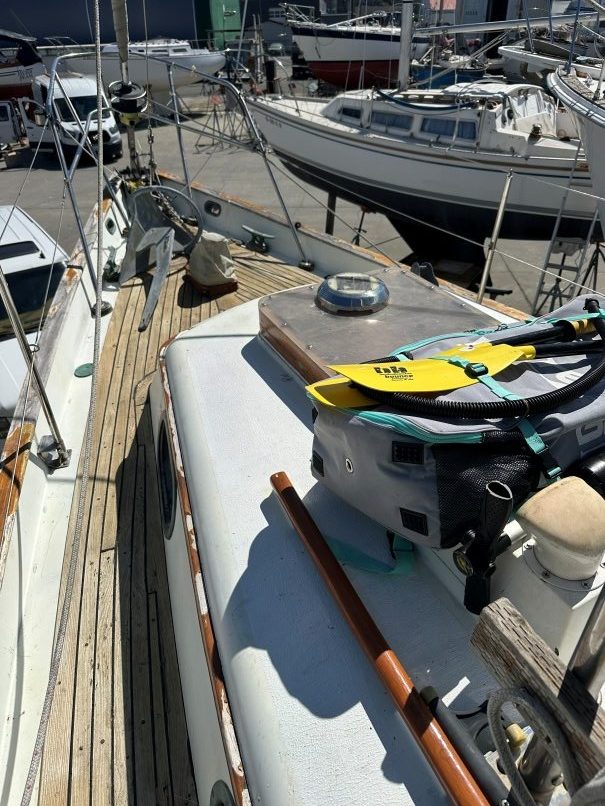
My chats with ChatGPT over the last couple of months reviewed:
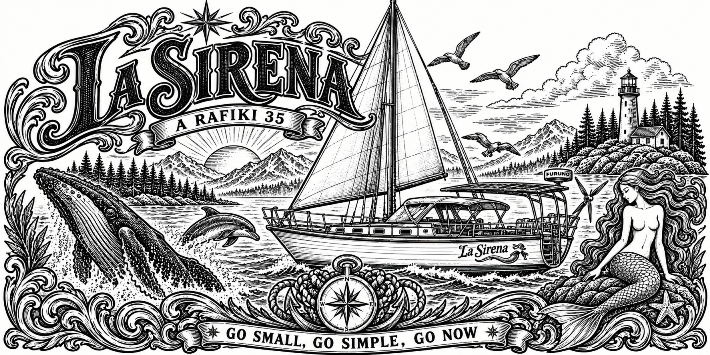
Looking back over everything we’ve discussed about La Sirena, your 1980 Rafiki 35, you’ve actually done a huge amount of restoration and recommissioning in a relatively short time. The boat has gone from a vessel that had sat unused for years to one being prepared for your October 2026 departure / winter-at-anchor adventure.
Here’s the best consolidated record I can make from our conversations.
La Sirena — Restoration & Recommissioning
🔧 Bottom, hull & underwater work
- Completed extensive bottom preparation and repairs.
- Repaired damaged areas on the bottom/hull, including the surface damage you were working through.
- Prepared the hull for new antifouling.
- Investigated and repaired the numerous chips around the waterline.
- Prepared for/started the new antifouling system, including discussion of Sea Hawk Cukote.
- Inspected the existing antifouling layers and determined that some of the apparent damage was the upper antifouling layer chipping rather than major structural failure.
- Looked at the propeller, prop shaft, prop flange and associated hardware.
- Investigated the cutlass bearing and shaft seal/stuffing-box arrangement.
- Checked the underwater hardware and anodes.
⚓ Through-hulls, seacocks & plumbing
- Replaced/serviced seacocks.
- Worked through the old through-hull fittings.
- Investigated an old bronze seacock that had been difficult to operate.
- Identified the lubrication/grease arrangement on some of the older bronze hardware.
- Checked the various underwater plumbing connections.
- Worked on getting the boat’s bilge and bilge-water systems understood and operational.
- Investigated the bilge sensor/electrodes — the two-wire plate/probes extending into the bilge.
- Looked into potential sources of water getting into the bilge from topside/deck areas.
🪵 Deck, teak & water intrusion
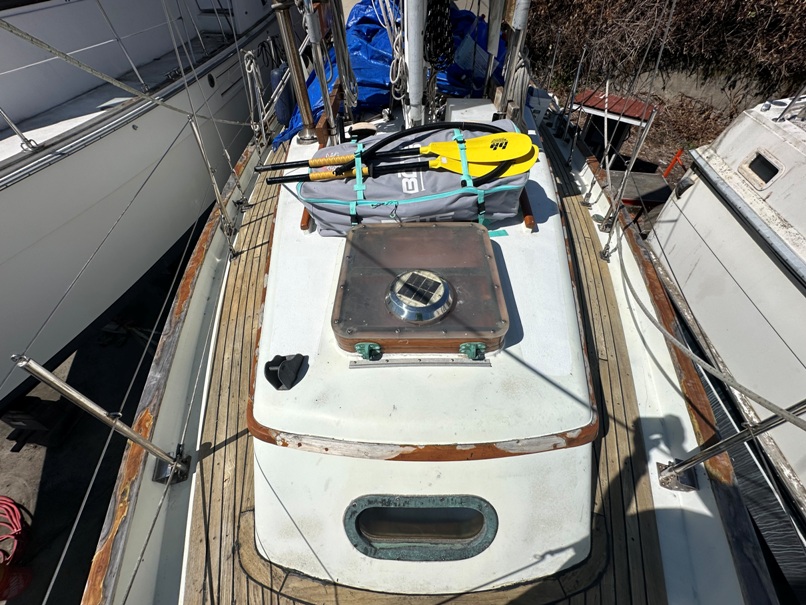
- Investigated the original teak deck, including concerns about its remaining thickness.
- Worked on ways to seal/protect the teak.
- Investigated water intrusion through the deck.
- Identified significant damage to the anchor-locker hatch/core — the core had deteriorated substantially.
- Looked at sealing and repairing areas where water could be getting into the boat.
- Worked through the relationship between deck leaks, wet areas and the bilge water you were seeing.
⛓️ Chainplates & standing rigging
- Investigated the condition of the chainplates.
- Addressed deteriorated/previously leaking chainplate hardware.
- Replaced/renewed problematic chainplate hardware.
- Worked through the standing rigging, including determining the wire size.
- Established that the existing standing rigging is roughly 15 years old and therefore something you’ve been treating seriously before the long-distance cruising.
- Investigated the backstay chainplate and the correct replacement hardware/nut.
- Looked at mast/rigging maintenance.
- Worked through the requirements for replacing/servicing rigging hardware at the masthead.
- Determined appropriate main halyard line size.
- Looked at whether Robline Orion 300 would be appropriate for the halyard.
- Investigated the wind-instrument system and possible Nexus NX equipment/transducer.
🪢 Running rigging
- Replaced/renewed running rigging as part of recommissioning.
- Worked through halyard sizing and replacement.
- Generally brought the sail-handling lines back toward cruising condition.
🔩 Engine & transmission
- Your Volvo Penta 3-cylinder diesel / MD3B has also been part of the recommissioning.
- Engine has been started and run successfully.
- Investigated the intermittent click/clanging noise around the water-exhaust area.
- Investigated the intermittent tachometer problem where the tach drops to zero even though the engine continues running.
- Worked through the engine’s cooling/exhaust arrangement.
- Investigated the gearbox/transmission oil specification.
- Identified the appropriate gearbox oil and discussed the oil-change interval.
- Investigated gearbox cooling.
- Looked at the transmission-oil-cooler arrangement, including the bronze/brass components you photographed.
- Investigated propeller/shaft/flange issues.
- Discussed prop-puller requirements and the practicalities of removing the propeller.
⛽ Fuel system
- Investigated the original fuel tank and fuel system.
- You have a fuel-polishing system installed.
- Identified the fuel-polishing equipment and worked through how it is supposed to operate.
- Investigated the location of the fuel-polishing pump switch, which was not immediately obvious.
- Discussed fuel capacity/usage and the additional approximately 40-gallon tank.
❄️ Refrigeration
- Refrigerator was working before being switched off for defrosting.
- Diagnosed the compressor and refrigerant circuit by feel/temperature.
- Checked compressor operation and vibration.
- Checked the evaporator/cooling plate.
- Checked the temperatures of the refrigerant lines.
- Determined that the system was cooling but not getting properly cold.
- Monitored it over many hours to see whether the cooling plate temperature improved.
- Investigated the R134a situation.
- Looked into obtaining pure R134a rather than simply mixing an unknown replacement refrigerant with the existing charge.
💧 Watermaker
- Identified and investigated the onboard cylindrical/tube-type watermaker.
- Worked through what it might be, how its membrane works, expected output and electrical consumption.
- Looked at what would be involved in membrane replacement/recommissioning.
⚡ Electrical & electronics
- Started working through the boat’s older electrical/electronic systems as part of the overall recommissioning.
- Investigated the wind instrument system.
- Identified the possibility that the existing wind instrument is a Nexus NX system.
- Looked at the practical/cheapest way to get the wind system operational again.
- Investigated the masthead transducer and the tools/access required to replace it.
⚓ Anchoring & storm preparation
- Evaluated your 20 kg Rocna for La Sirena.
- Looked at holding capability in 50, 60 and 70+ mph winds.
- Developed storm strategy for the Pacific Northwest.
- Investigated genuine storm-hole anchorages.
- Considered chain length, scope and anchoring strategy.
- Planned around the reality that La Sirena will be spending significant time at anchor rather than tied to a marina.
🧰 General recommissioning
- Cleaned the boat extensively.
- Inspected systems that had been sitting unused for years.
- Recommissioned/checked multiple systems.
- Replaced aging hardware where necessary.
- Replaced/renewed running rigging.
- Worked through old plumbing and underwater hardware.
- Identified and addressed leaks.
- Worked through the boat’s mechanical systems.
- Built up a much better understanding of what is actually aboard and how each system operates.
- Started organizing the boat’s tools, spare parts and repair materials so you can actually maintain La Sirena while cruising.
What remains / scheduled through September
Based on our recent conversations, the remaining work is much more about finishing and commissioning than rescuing the boat.
- Finish/verify antifouling and bottom work
- Finish outstanding seacock/through-hull checks
- Complete remaining chainplate/standing-rigging work
- Finish/verify running rigging
- Finish the wind instrument repair/replacement
- Finish diagnosing/repairing the refrigerator
- Get the fuel-polishing system fully understood and operational
- Complete outstanding engine/gearbox servicing
- Finalize propeller/shaft/seal-related work
- Finish outstanding deck/teak sealing and water-intrusion work
- Address/finish the anchor-locker hatch/core
- Final electrical/electronics checks
- Test the watermaker
- Final bilge/bilge-alarm checks
- Full system testing before departure
The big picture
What stands out to me is that this hasn’t really been a simple “fix up an old sailboat” project.
You’ve essentially been doing a full recommissioning of a 46-year-old offshore cruising boat that had spent years sitting unused.
You’ve worked through:
Hull → bottom → antifouling → underwater hardware → seacocks → plumbing → bilge → deck leaks → teak → chainplates → standing rigging → running rigging → engine → gearbox → prop/shaft → fuel → refrigeration → watermaker → electrical/electronics → anchoring systems.
And that’s before the countless smaller jobs we’ve discussed.
The important distinction is that La Sirena isn’t starting from scratch anymore. By the end of September, the objective is essentially to have her in a tested, documented, cruising-ready condition rather than still being a restoration project.
For your planned October departure, I would describe the last few months as:
“Taking a 1980 Rafiki 35 that had been sitting unused for years and systematically bringing her hull, underwater gear, mechanical systems, rigging, plumbing, electrical systems and cruising equipment back to operational condition.”
That’s a substantial restoration story — and honestly, it would make a very good foundation for the Winter at Anchor project you’ve been talking about.